By Ed Sutton, MD
In 2017, the American Heart Association (AHA) and the American College of Cardiology (ACC) published new guidelines for diagnosing and treating high blood pressure. Initial recommendations continue to be lifestyle and diet changes for the “elevated” category; this change probably will not affect anesthesia providers. What we are challenged with on a far too frequent basis are patients presenting in the “hypertensive crises” categories, with systolic BP > 180 mm Hg and diastolic BP > 120 mm Hg. Become familiar with each of the new categories.
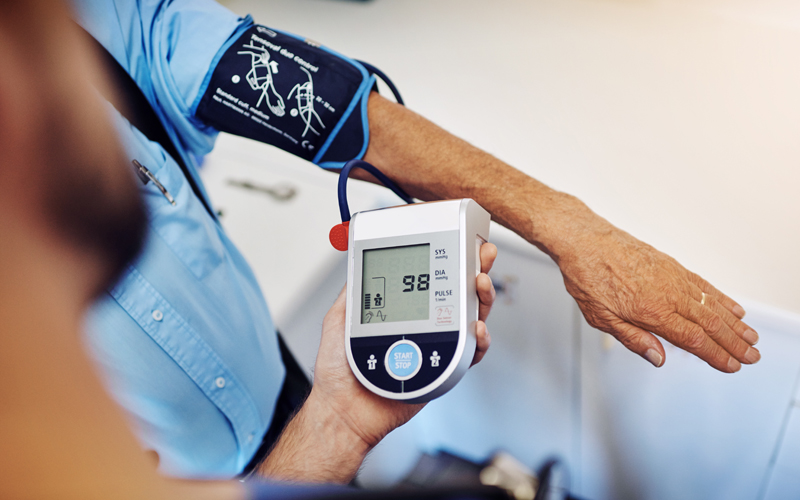
When encountering a patient thought to be in a hypertensive crisis category, find a properly fitted sphygmomanometer and perform a true auscultated blood pressure check. Commonly used oscillometric non-invasive blood pressure (NIBP) cuffs do not directly measure systolic and diastolic pressures. NIBPs assign the point of maximal oscillations as the MAP and calculate systolic and diastolic values using proprietary algorithms. For the engineering-inclined, an explanation is available here. The discussion and conclusions are worth the read.
If you feel the reported blood pressures are accurate, consult with the patient’s gastroenterologist to formulate a plan that minimizes cardiovascular risk. Anxiety aside, blood pressures this high in a patient without a hypertension diagnosis should represent a hard stop that warrants further evaluation. In previously diagnosed patients who may have skipped antihypertensive doses due to NPO instructions or noncompliance, consider a trial of IV medication after consultation. Often, blood pressure can be brought into an acceptable range quickly; if not, it demonstrates that appropriate care was attempted.
Many of our centers provide GI and anesthesia care for patients with end-stage renal disease (ESRD) requiring dialysis. The ASA recognizes that ESRD patients undergoing regular dialysis without additional comorbidities may be classified as ASA Physical Status 3. However, many presenting ESRD patients have comorbidities posing a persistent threat to life, placing them in ASA 4. Medicare data indicate that nearly 56% of patients initiating dialysis will die within the first year.
Anecdotal reports of poor outcomes in dialysis patients undergoing GI procedures describe a vasoplegia-type syndrome with limited responsiveness to standard vasopressors. Whether this reflects hypercarbia and secondary worsening of metabolic acidosis remains unclear. For this reason, propofol deep sedation should be avoided in these patients. Most do well with moderate sedation, with only rare need for carefully titrated low-dose propofol in combination with midazolam and fentanyl.
In vasoplegic syndrome, vasopressin should be administered early, as it remains effective in acidotic environments and potentiates other vasopressors. This can provide time to correct underlying acid–base disturbances so catecholamines regain effectiveness. When sedating dialysis patients, ensure vasopressin is readily available, know the bolus dosage (0.5–1 unit), and prepare appropriate dilution in advance. A comprehensive review of vasoplegic syndrome is available here.